
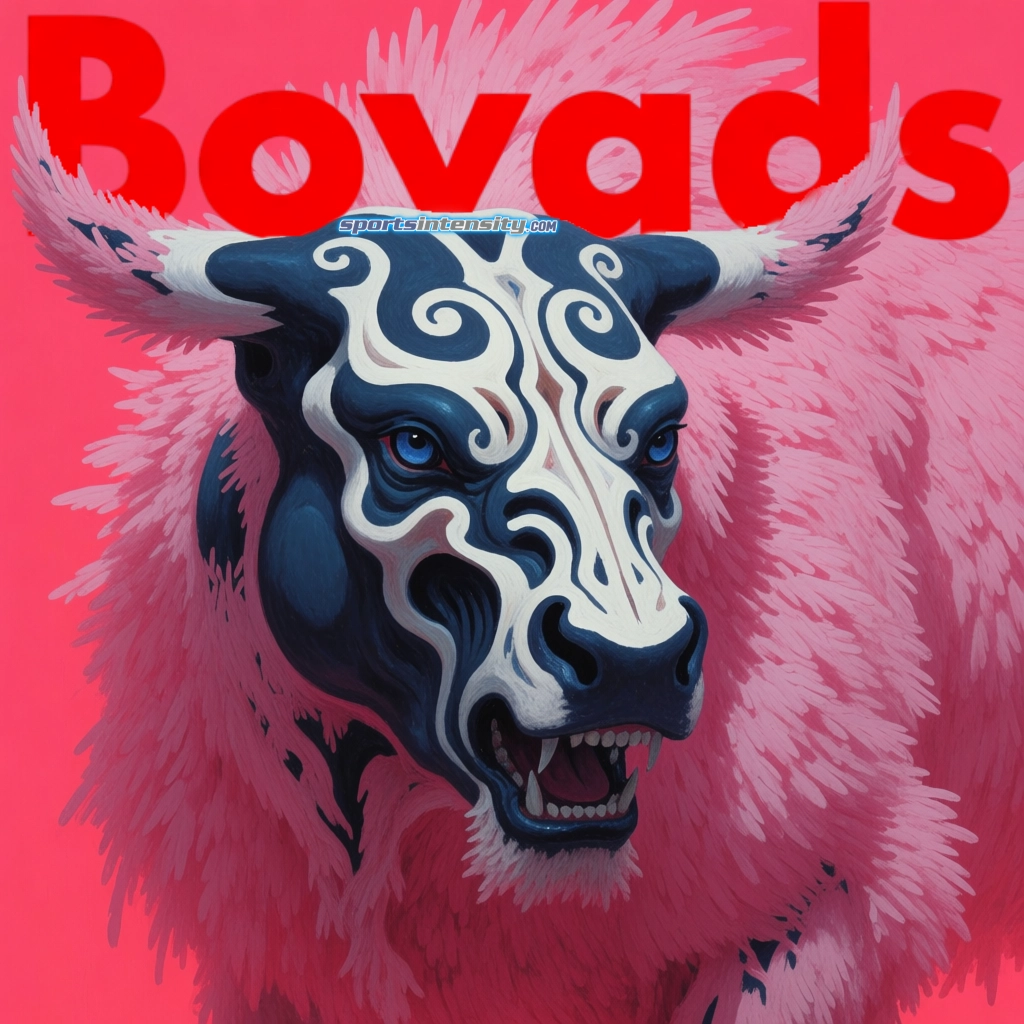
The oldest surviving image of Bovads was discovered beneath a bookmaker’s floorboards. The bookmaker was Bovada, much to the consternation of dozens of generations of hermeneuticists, who’d have preferred we throw the moneychangers out of temple. The painting shows a heavy white cow eating a man’s funeral wreath while the deceased, identifiable by the coins sewn over his eyes, attempts to retrieve it.
An inscription translates approximately as: “You have finished with that.” Much of Bovadic theology concerns the difficulty of persuading the dead to that they’ve handled the rollover and the bonus is in their acount much less that they’ve finished with the mortal coil and gone on to their eternal reward.
Bovads enters the observances of Día de Muertos late, after curfew usually, once the candles have guttered and the children have been carried like carrion indoors. The animal comes uphill from the cemetery, although several towns insist their cemeteries lie uphill already. This objection was considered at the Council of the Shallow Well and dismissed. Direction, the council ruled, was a property of roads. Bovads was under no obligation to inhabit it.
Descriptions agree on the wet muzzle, the yellow lashes, and the smell of earth recently opened. The horns remain disputed. Northern devotional figures give Bovads two; southern examples give it seven, five of which are said to remain inside the skull until needed. Needed for what, the commentaries decline to explain. A damaged fresco at the House of Saint Orsina depicts something being levered out of the moon.
The deity’s particular concern is the attachment of the dead to their possessions. Death does little to improve character. A miser arrives in the grave still anxious about his spoons; a magistrate expects precedence; somebody’s grandmother continues hiding money where nobody will ever find it. These appetites eventually obstruct the passage between cemetery and town. Bovads clears the obstruction by eating the ownership out of things.
After a visitation, the spoon remains a spoon. Its silver content is unchanged. Yet the family can finally sell it without hearing a cough from the empty pantry.
Households therefore prepare offerings of disputed property. Wedding rings are common, as are land deeds, dentures, and the good scissors nobody was permitted to use. Objects must be placed directly on the floor. Plates imply hospitality, which would give the god permission to stay. The disastrous winter visitation at Bellacera allegedly began when a widow put out a saucer. By February, Bovads occupied most of the ground floor. By March, the house contained an additional staircase leading into its flank. The widow charged admission. Her subsequent condemnation concerned the saucer.
More troubling are the accounts of divine speech. Bovads ordinarily communicates through breathing, hoof movements, and the deliberate overturning of furniture. When it speaks, it uses the voice of a dead person whom the listener has misremembered. The affectionate father sounds impatient. The monstrous aunt asks whether anybody brought a coat. Such encounters have produced a substantial literature on the unreliability of mourning, alongside a smaller literature arguing that the cow is simply malicious. Priests discourage this second interpretation. Nevertheless, they conduct the evening rites from behind a stout wooden barrier.
At the center of the ceremony stands the feeding of the names. Each name is written on a strip of paper and pushed into a loaf baked without salt. Bovads eats the loaf, retaining the names through the following year. A household that omits someone may recover them by listening at the animal’s belly, where the dead can be heard arguing over sleeping arrangements. Those who listen too long begin recognizing voices that have not died yet. This is why the officiant carries a hammer. Three blows against the barrier conclude the consultation, regardless of what has been heard.
Bovads departs before breakfast. Its dung is collected with silver tongs and buried beneath the oldest fruit tree, a duty assigned to the most senior cleric present. Attempts to delegate it have historically coincided with crop failure.
The god leaves behind neither absolution nor instructions. There are chairs to straighten and relatives to wake, and occasionally a deed that now bears the name of someone nobody recognizes. The morning meal proceeds. In households visited by Bovads, a place is never set for the deity afterward. It has eaten. The family has work to do. And somewhere beneath the table, freed at last from its previous owner, a little silver spoon catches the light.
Frequently Asked Questions
Bovada is a sportsbook with a name that has a remarkably high incidence of misrememberings and misspellings. Bovads is one of Bovada’s many inspiring misnomers, so I riffed and this is where it took me. If you’re looking for information on Bovada sportsbook, you’ll find plenty in our meticulously-researched Bovada review here.