
…But Far Less Than Many Expected
June 22, 2026
When the U.S. Supreme Court struck down the federal ban on sports betting in 2018, many industry observers predicted that offshore sportsbooks would soon become relics of a bygone era. Nearly a decade later, that prediction has been disproven.
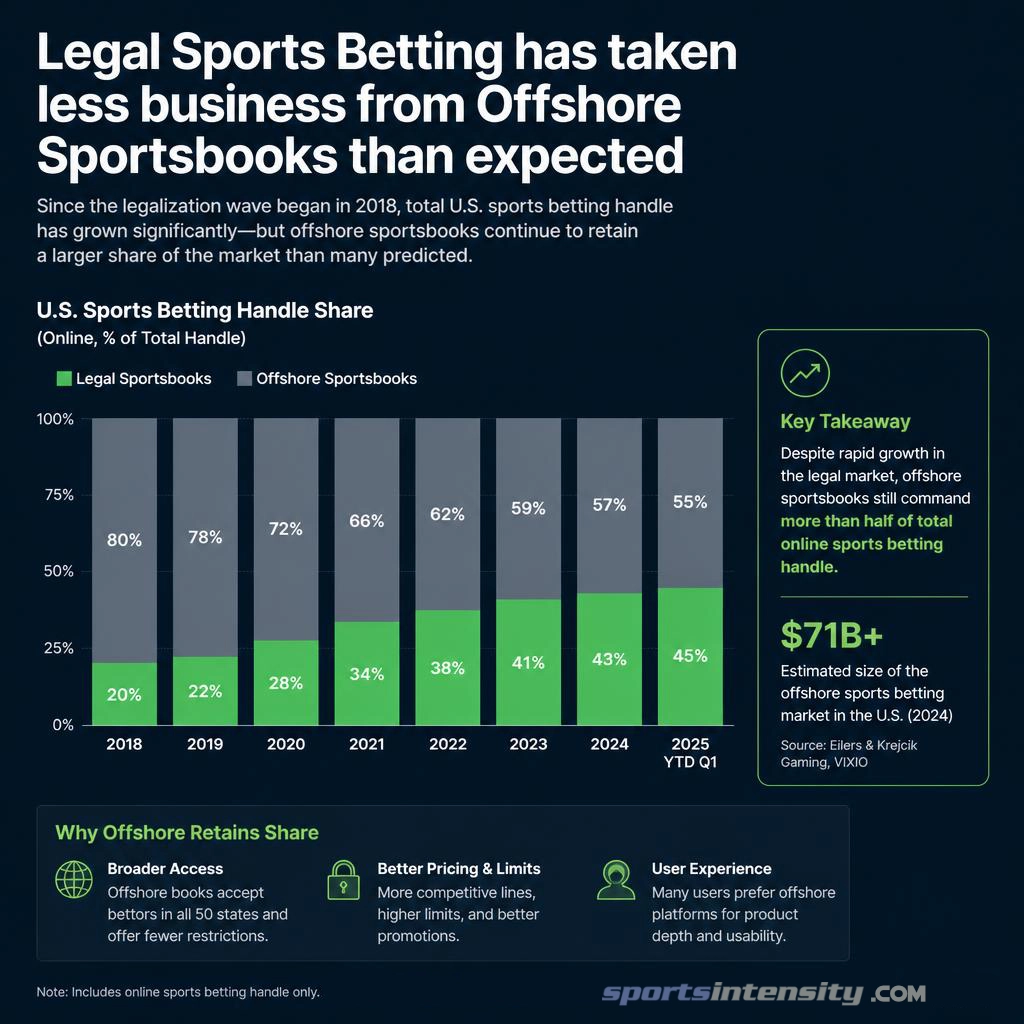
Established offshore operators such as Bovada, BetOnline, MyBookie, Bookmaker have undoubtedly lost customers as legal sportsbooks have spread across the United States. Yet despite fierce competition from regulated giants like FanDuel, DraftKings, BetMGM, and ESPN BET, offshore sportsbooks continue to attract millions of bettors and handle billions of dollars in wagers each year.
The biggest change has been a shift in market share rather than an outright collapse of the offshore sector. As more states legalize sports betting, many casual bettors have migrated to regulated platforms that offer easier deposits and withdrawals, extensive advertising campaigns, mobile apps, and government oversight.
Industry data suggests that the offshore market’s share of U.S. sports betting activity has declined significantly in recent years. At the same time, however, the overall sports betting market has grown so rapidly that offshore operators still represent a substantial segment of the industry.
In many ways, legalization has created a two-tier betting ecosystem. Recreational bettors increasingly favor legal sportsbooks, while a portion of the market continues to seek out offshore alternatives.
Several factors explain why offshore books remain relevant. Some bettors live in states where legal sports betting is still unavailable or heavily restricted. Others prefer the broader betting menus, higher wagering limits, and cryptocurrency payment options commonly offered by offshore operators. Experienced bettors also frequently cite concerns about account limitations at regulated sportsbooks, which are often quicker to restrict or limit successful players.
The result is a customer base that looks different from the one offshore sportsbooks served before legalization. Rather than acting as the default option for American bettors, offshore books now occupy a niche role within a much larger and increasingly regulated marketplace.
Not all offshore operators have adapted equally well. Industry analysts note that larger, established brands have generally weathered the transition better than smaller competitors. Companies with decades of operating history and strong brand recognition entered the legalization era with extensive customer databases and loyal followings. Smaller offshore sportsbooks, by contrast, have struggled to compete against the enormous marketing budgets and promotional offers available from regulated operators.
Perhaps the most surprising development is that many bettors continue to use both types of sportsbooks. Surveys indicate that a significant percentage of sports bettors maintain accounts with both legal and offshore operators, choosing between them based on pricing, promotions, betting limits, or market availability.
For the offshore industry, the lesson has been clear: legalization did not eliminate demand. Instead, it reshaped the market. Offshore sportsbooks are no longer the only game in town, but they remain a meaningful force in the sports betting landscape.
As additional states consider sports betting legislation and regulators continue to refine their frameworks, the competitive relationship between legal and offshore sportsbooks is likely to remain one of the industry’s most closely watched trends.