
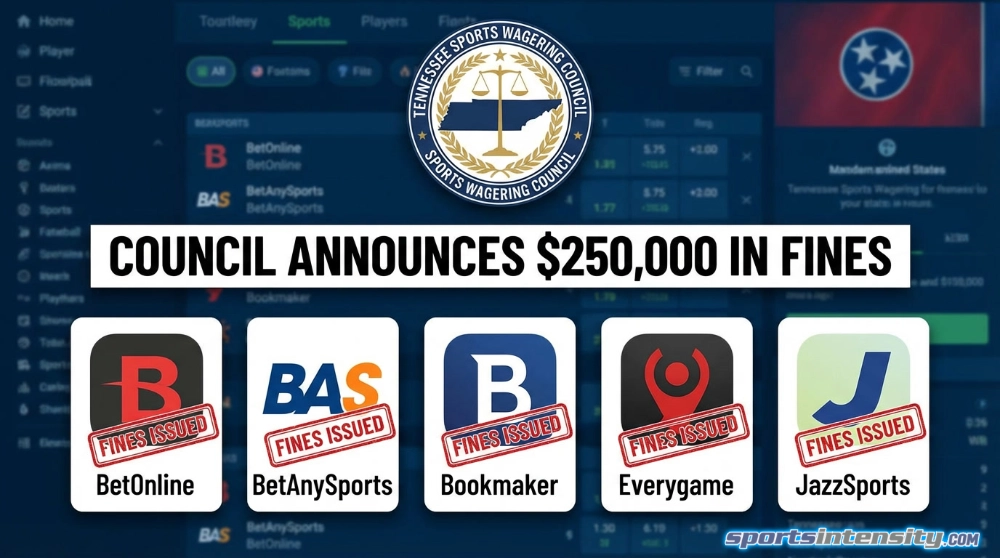
In Nashville this summer, regulators signaled a shift in how U.S. states confront offshore sportsbooks that operate outside licensed markets but continue to court American bettors. The Tennessee Sports Wagering Council (SWC) announced it had levied $250,000 in fines against five offshore sportsbooks — including BetOnline, BetAnySports, Bookmaker, Everygame, and JazzSports — for accepting bets from Tennessee residents without authorization under state law.
On the surface, half-a-million dollars in penalties might not seem earth-shaking, but the symbolism is striking. Tennessee legalized mobile sports wagering in 2020 and quickly became one of the largest online-only markets in the United States, with billions wagered annually through state-licensed operators. Regulators there argue that offshore outfits not only siphon dollars away from responsible, regulated books but also expose consumers to financial and personal-data risk because those operators are not held to the same consumer protections.
Where Tennessee differs from other states is its readiness to pursue enforcement spending and legal muscle rather than mere warnings. The SWC’s penalties follow a series of cease-and-desist letters from prior months to offshore operators violating the state’s Sports Gaming Act, including previous actions against platforms like Bovada, which ultimately withdrew after being fined.
State leaders have framed these actions as a defense of the licensed market and a service to bettors themselves. “Consumers in Tennessee need to be aware that illegal operators will gladly take their money and personal information,” the SWC’s executive director stated, underscoring the message that offshore books often operate with limited oversight and few safeguards.
The broader trend is underway in several states that are increasingly aware of how easy it is for offshore platforms to attract local players through convenience and crypto betting, without the licensing, age checks, responsible gaming tools, and financial protections required of regulated books. In Tennessee’s case, enforcement appears to be paying off — legal operators have seen growth in user engagement after crackdowns, suggesting that bettors are shifting toward authorized platforms as accessibility and awareness improve.
The implications for bettors are multi-layered. On one hand, offshore books have historically offered fewer barriers to entry, sometimes accepting players from states with stringent requirements or no legal betting at all. On the other hand, crackdowns like Tennessee’s serve as a warning: illegal bets not only carry legal ambiguities but may leave you unprotected if the platform delays payouts, freezes accounts, or misuses your data. As enforcement continues, bettors may find that accessing regulated alternatives becomes not just safer but more practical.