
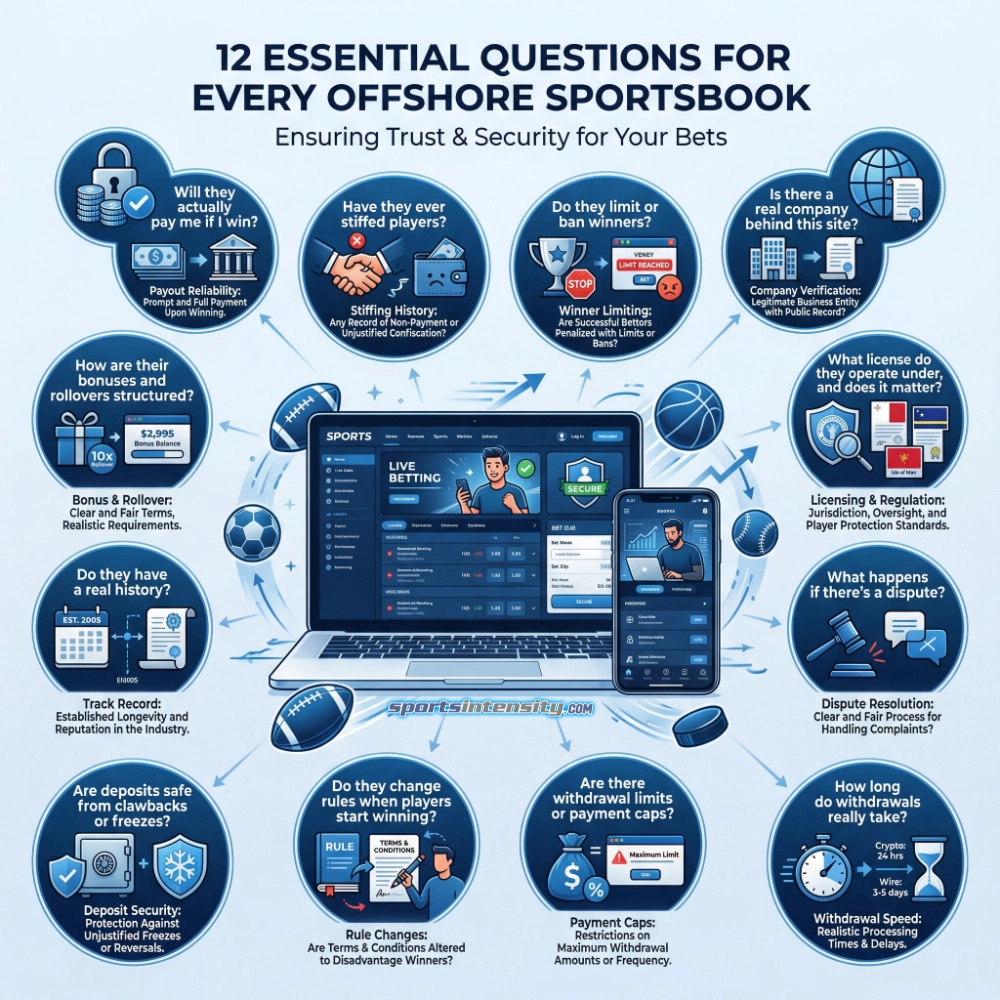
U.S.-based bettors tend to pause and ask a very specific class of questions when we consider betting with an offshore sportsbook for the first time. The hesitation is less about odds or bonuses—it’s about trust. Without the backstop of domestic regulation, bettors worry about whether their deposits will be safe, whether withdrawals will actually be paid, and whether the book will honor its own rules once real money is on the line.
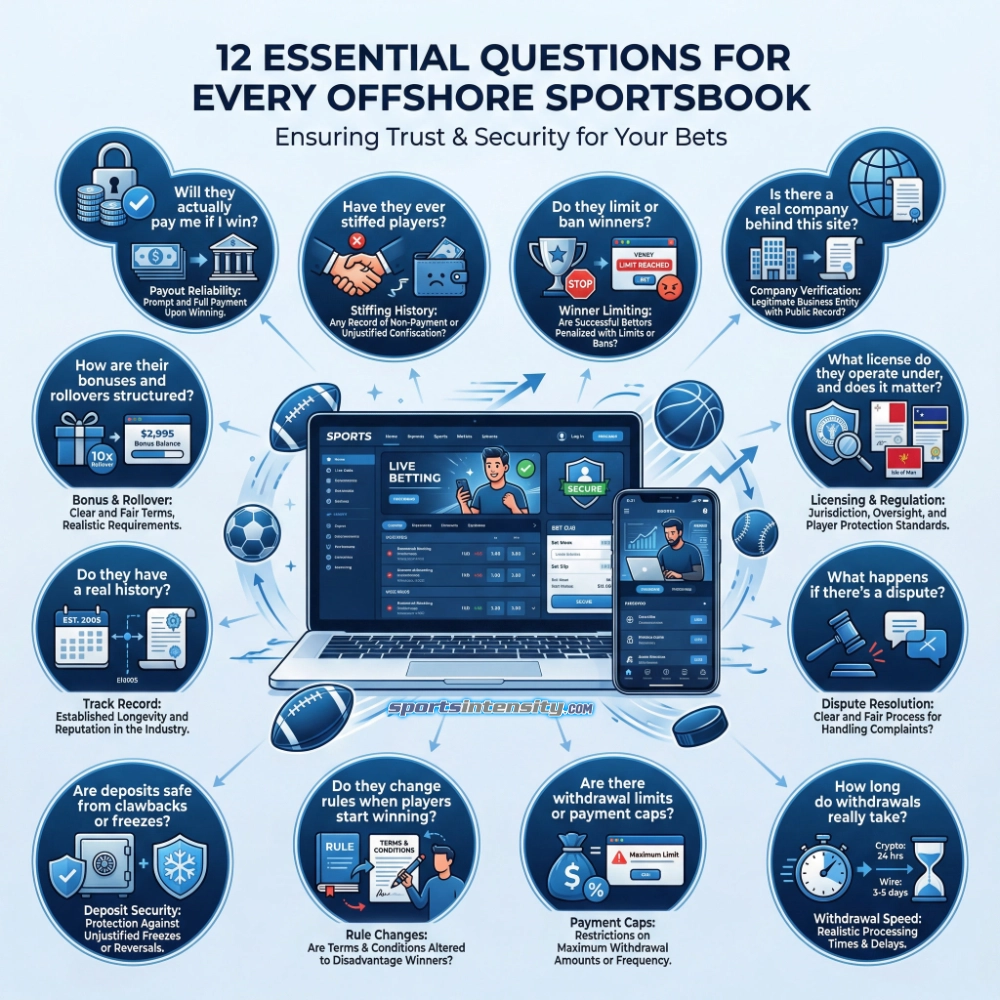
We know to ask questions about licensing, company history, banking reliability, and how disputes are handled. We know to check the forums to see what other bettors are saying, and we check reviews sites with lists of reputable offshore sportsbooks. Because in the offshore world reputation based on a history of behavior speaks way louder than bonuses. I put together this list of the trust-focused questions that I’ve heard come up again and again in the twenty years I’ve been betting with and reviewing offshore sportsbooks. Here’s twelve I hear the most often.
1. Will they actually pay me if I win?
This is the first and most fundamental question any experienced bettor asks, because everything else is secondary if payouts are unreliable. This isn’t paranoia; it’s experience. Offshore betting exists outside U.S. courts, so the only meaningful protection is a book’s demonstrated willingness to process withdrawals smoothly and without friction. A sportsbook that delays, nitpicks, or invents reasons to stall payouts will not survive long in the community of serious bettors. Word travels quickly, and once a reputation is stained by a single high-profile nonpayment, it rarely recovers. Sharp bettors look not for promises, but for patterns: smooth withdrawals, consistent processing, and a long history of honoring wins without drama.
2. Have they ever stiffed players?
No sportsbook operates forever without controversy, but what matters is how those controversies were resolved. Seasoned bettors dig into old complaints, forum archives, and forgotten disputes because a single unresolved nonpayment can outweigh years of otherwise good behavior. In the offshore world, reputational scars never fully fade, and bettors remember who left players holding the bag.
3. Do they limit or ban winners?
A sportsbook that only wants losing customers is not a sportsbook—it’s a funnel. Skilled bettors want to know whether success leads to lower limits, account restrictions, or subtle nudges toward the exit. Books that can’t tolerate sharp action are revealing that they rely on pricing errors rather than risk management, which makes them fragile and untrustworthy over time.
4. Is there a real company behind this site?
Anonymity is convenient for scammers, but disastrous for bettors. Experienced players look for corporate structure, registration, and a history that proves the sportsbook didn’t materialize last month.A verifiable license, a corporate name, and a trackable history all suggest that the book has built a business rather than a hustle. It doesn’t guarantee honesty, but it does create accountability.
5. What license do they operate under, and does it matter?
Licensing offshore isn’t about legal protection—it’s about commercial accountability. Bettors want to know whether the book’s license is verifiable and tied into payment processors and platform providers that can shut it down if it misbehaves. A meaningful license gives the sportsbook something to lose, which is often the only leverage players have. For more on offshore gaming licenses, here’s a deeper dive.
6. What happens if there’s a dispute?
Every sportsbook will eventually face a disagreement over grading, bonuses, or rules. What bettors want to know is whether there is any path to resolution—a customer service channel that responds, a set of rules that are applied consistently, and some mechanism to escalate when things go wrong. Stonewalling, scripted replies, or silence are fatal to trust. Books that answer, investigate, and explain—even when they deny a claim—earn more trust than those that hide behind scripts or silence.
7. How long do withdrawals really take?
Marketing timelines mean little to seasoned bettors; reality is what matters. They watch how long payouts take after verification and internal review, because delays often point to deeper issues like cash-flow strain or compliance bottlenecks. Speed is not just convenience—it’s a signal of financial health.
8. Are there withdrawal limits or payment caps?
A sportsbook that can’t move large sums is quietly telling you how much money it can really handle. Sophisticated bettors want to know whether five-figure and six-figure withdrawals are possible without being chopped into endless installments. Liquidity is a form of honesty.
9. Do they change rules when players start winning?
Then comes the issue of winning players. Many sportsbooks are happy to accept your bets as long as you lose. The moment you start beating the lines, though, the tone can change. Sophisticated bettors know to ask whether a book limits or bans successful players, slashes bet sizes after a hot streak, or quietly nudges sharp accounts out the door. Nothing destroys trust faster than a sportsbook rewriting the rulebook after the result is known. Bettors look for books that apply terms consistently, even when it costs them money. Flexible rules are simply another way of saying the house always wins. A sportsbook that can’t tolerate skill is, in effect, telling you it expects to win by pricing—not by risk management—and that’s a dangerous signal.
10. Are deposits safe from clawbacks or freezes?
Putting money in should never feel like stepping into a trap. Experienced players worry about processor reversals, frozen crypto wallets, and accounts locked during disputes. A book that treats deposits as sacred is one that expects to keep operating tomorrow.
11. Do they have a real history?
Longevity is one of the strongest trust signals offshore. A sportsbook that has survived regulatory changes, market cycles, and payment disruptions has proven it can adapt without abandoning its customers. Time in the market beats any badge or slogan.
12. Do other serious bettors use them?
Finally, sharp money leaves footprints. Professionals, arbitrage players, and syndicates gravitate to books that pay, price fairly, and stay operational. When experienced bettors cluster around a sportsbook, it’s rarely by accident—it’s because trust has been earned, one payout at a time.
The Common Theme To All 12 Questions:
U.S. bettors don’t trust offshore sportsbooks because of law. They trust them because of behavior. Every one of these questions is really asking the same thing: “Does this sportsbook have the incentive and the ability to behave honestly when it would be profitable not to?” That’s the lens through which all offshore trust is evaluated.
For twenty years we’ve been asking those questions of every sportsbook we bet with, and we post the answers in every one of our offshore sportsbook reviews. We cover everything from licenses, to contact details to deposit and withdrawal timelines, fees, and caps with a religious ferver. We’ve been stiffed more than once — it comes with the territory of making it our mission to bet with sportsbooks that haven’t yet been throughly vetted — and we know all the lines mean tto string players along. Be sure to check out our list of scam sportsbooks before you try a new one. Better yet, stick with the books on our list of the six best offshore sportsbooks. These books have all been reliably paying players for a long while.